 Site Search


A GI Pathologist’s Perspective on Hematolymphoid Neoplasms of the GI Tract
-
-
Credits:

- CME: 0.75
- P.A.C.E.®: 0.5
-
Course Difficulty: Advanced
-
Video Length:41m, 09s
-
Downloads:
-


The GI tract is the most common site of extranodal lymphomas. Dr. Bellizzi believes that surgical pathologists often have a better “sense” of normal/reactive GI-associated lymphoid tissue (GALT) than some hematopathologists and a couple of important GI lymphomas arise in association with Helicobacter gastritis (i.e., extranodal marginal zone lymphoma of mucosa-associated lymphoid tissue) and celiac disease (enteropathy-associated T-cell lymphoma). This lecture will present the DUMB (destructive, unusual, monotonous, big) approach to recognition of possible lymphomas and a morphologic pattern-driven IHC approach to arrive at specific diagnoses. A number of specific diseases will be discussed, including gastric MALT lymphoma, enteropathy associated T-cell lymphoma and precursors, large B-cell lymphoma (which is usually diffuse large B-cell lymphoma), mast cell disease, duodenal-type follicular lymphoma, and EBV-positive mucocutaneous ulcer.
Originally published on February 4, 2026
Lecture Presenter
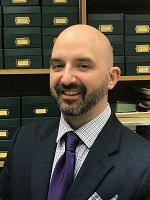 | Andrew M. Bellizzi, MD Clinical Professor, Director of Immunohistochemistry, Director of GI Pathology Fellowship Track, Department of Pathology |
Dr. Andrew M. Bellizzi is a clinical professor in the Department of Pathology at the University of Iowa. Dr. Bellizzi completed undergraduate work in Anthropology and Science Preprofessional Studies at the University of Notre Dame and received his medical degree from Northwestern University. Following combined training in anatomic and clinical pathology at the University of Virginia, he completed a fellowship in gastrointestinal and liver pathology at The Ohio State University. Dr. Bellizzi served as a junior faculty member at Brigham and Women’s Hospital for two years before moving to Iowa.
Dr. Bellizzi is director of Immunohistochemistry and GI Pathology and codirector of the GI Pathology Fellowship at the University of Iowa. He is an active member of the United States and Canadian Academy of Pathology (USCAP), the American Society for Clinical Pathology (ASCP), the College of American Pathologists (CAP), and the North American Neuroendocrine Tumor Society (NANETS), including serving as the immediate past chair of the USCAP Stowell-Orbison Award and the CAP Immunohistochemistry committees. He is secretary-treasurer of the International Society for Immunohistochemistry and Molecular Morphology. Dr. Bellizzi serves as an associate editor (reviews) for Applied Immunohistochemistry and Molecular Morphology, a section editor (immunohistochemistry) for Archives of Pathology and Laboratory Medicine, and an assistant editor (GI pathology) for the American Journal of Clinical Pathology. He is on the Neuroendocrine Tumor Expert Panel for the ninth edition of the AJCC Cancer Staging Manual.
Dr. Bellizzi’s research interests include the diagnosis, classification, and etiopathogenesis of human disease, with an emphasis on gastrointestinal, pancreatic, neuroendocrine, and hereditary tumors. His research program focuses on applications of diagnostic immunohistochemistry.
Objectives
After this presentation, participants will be able to:
- Apply a DUMB approach to recognizing GI lymphomas
- Apply a morphologic pattern-driven, panel-based IHC approach to GI lymphoma diagnosis
- Apply critical, treatment-informing ancillary diagnostics in gastric MALT lymphoma (i.e., Helicobacter IHC and MALT1 FISH)
- Recognize the value and limitations of IHC phenotyping, TCR gene rearrangement studies, and flow cytometry in the diagnosis of refractory celiac disease type II (aka enteropathy-associated T-cell lymphoma in situ)
- Combine morphology, cell-of-origin (Hans classifier) and prognostic IHC (Bcl-2, c-Myc), and FISH studies (MYC/BCL2/BCL6) to distinguish diffuse large B-cell lymphoma, double- and triple-hit lymphoma, and Burkitt lymphoma
Sponsored by:
University of Utah School of Medicine, Department of Pathology, and ARUP Laboratories